Facilities Helpdesk Automation: A UK Guide
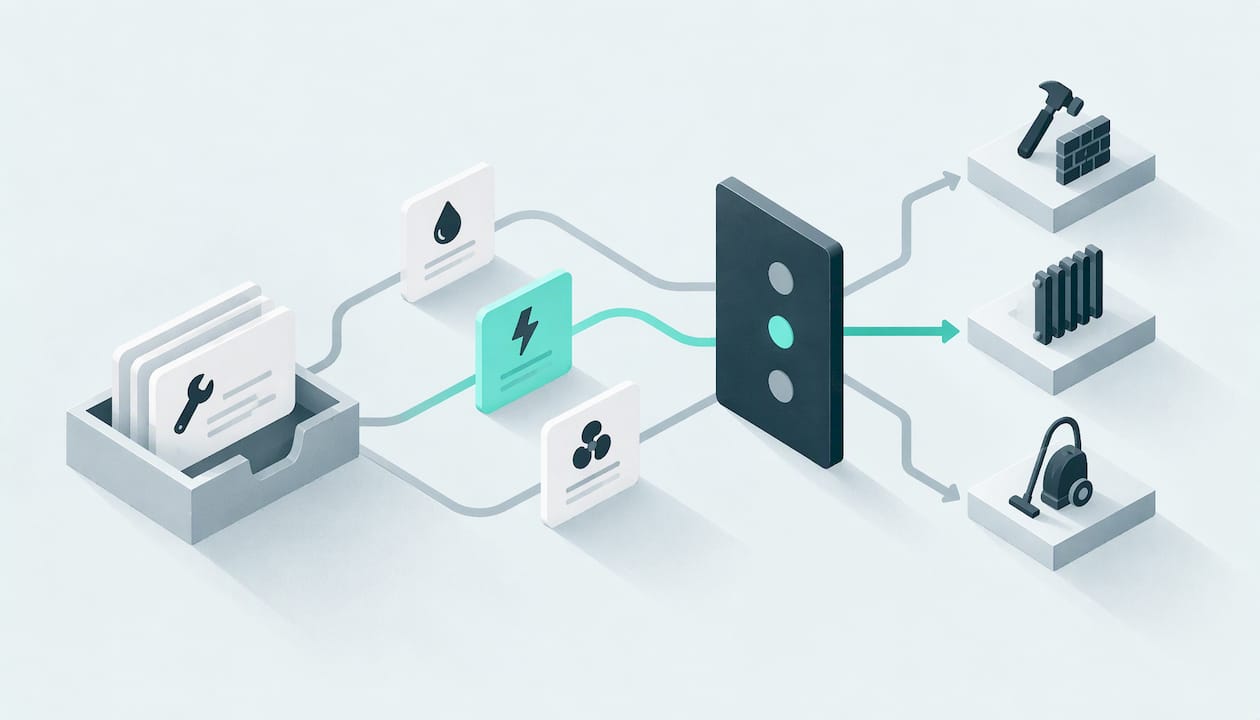
Facilities helpdesk automation means software logs, sorts and routes every maintenance request by phone, WhatsApp, web chat and email, so nothing waits for office hours. For a small UK property maintenance firm, DeskAgent® does this as four agents plus DeskAgent HQ, with your team keeping the judgement calls.
TL;DR
- A helpdesk logs each request, gives it a priority and sends it to the right person. Automation does the logging and sorting, people do the deciding.
- Automate intake, questions about the job, urgency checks, on-call alerts and follow-up. Keep pricing exceptions, safety calls on site and upset tenants with your team.
- A 2am leak in a London block shows the flow: intake, photos, urgency, on-call alert, then a summary when the manager asks.
- Setup takes five steps, and DeskAgent has no contracts, so you can cancel any time.
Table of Contents
- What is facilities helpdesk automation for a small firm?
- Which requests should you automate and which should stay human?
- How do you sort an emergency from a routine request?
- What happens when a tenant reports a leak at 2am?
- How do you set up helpdesk automation in five steps?
- What does it cost?
- Where does measurement fit?
- Our view on automating the front desk
- Where can you start?
- FAQ
- Sources
What is facilities helpdesk automation for a small firm?
A facilities helpdesk is the single point of contact for a building’s repairs and service requests. Industry guidance describes it as logging each request from phone, email, app or web portal, giving it a reference, and routing it by type, urgency and location.
No law requires you to run one. But the Workplace (Health, Safety and Welfare) Regulations 1992 require workplaces and equipment to be kept in efficient working order and good repair, and a helpdesk is how most organisations show faults are found, recorded and fixed.
Large contractors run this on dedicated systems with whole service-desk teams. OCS, for example, has piloted an AI agent in 2026 that answers calls within seconds, logs jobs and hands over to a colleague when needed. A firm with 1 to 30 staff needs the same discipline without the headcount: every enquiry caught, sorted and in front of the right person.
Which requests should you automate and which should stay human?
The line is simple. Anything repetitive and time-critical to capture goes to automation. Anything that needs judgement, authority or empathy stays with your team.
| Task | Automate | Keep human |
|---|---|---|
| Answering the call, message or email at any hour | Yes | |
| Collecting name, address, postcode, job type | Yes | |
| Asking for photos and details of the fault | Yes | |
| Sorting urgent from routine | Yes, using your rules | You set the rules |
| Alerting the on-call owner or engineer | Yes | |
| Booking routine visits into the calendar | Yes | |
| Filtering spam from the shared inbox | Yes | |
| Following up with the customer on WhatsApp | Yes | |
| Agreeing a price outside your normal range | Yes | |
| Deciding whether to make a site safe now | Yes | |
| Managing managing agents and key accounts | Yes | |
| Handling a complaint or a distressed tenant | Yes |
The OCS pilot frames it as a rebalancing: call answering and job logging move to AI so coordinators can focus on scheduling, follow-up and customer relationships. That is the right test for your own firm too.
How do you sort an emergency from a routine request?
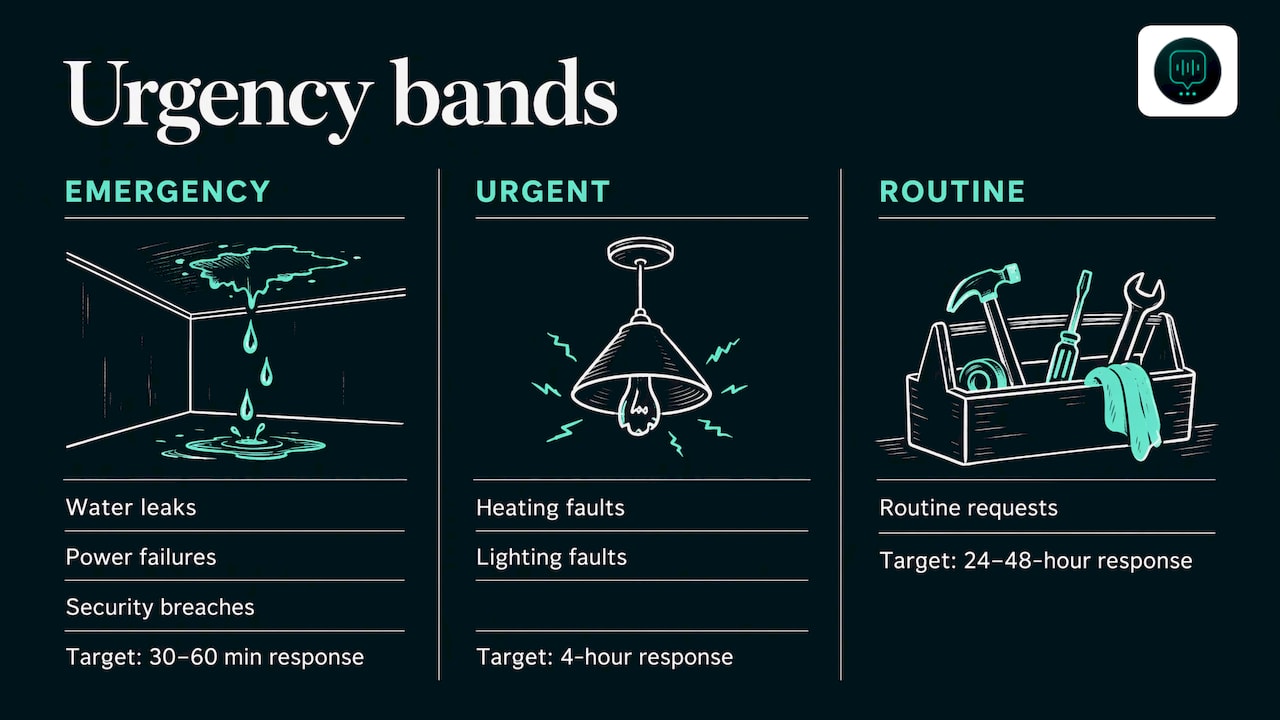
A workable helpdesk uses categories. One UK helpdesk guide puts water leaks, power failures and security breaches in the emergency band with a 30 to 60 minute response target, heating or lighting faults in an urgent band with four hours, and routine requests within 24 to 48 hours. Your contracts may define these differently, so write your own bands first.
DeskAgent qualifies each enquiry by job type, postcode and urgency, using rules trained on your services, coverage area and FAQs. Urgent jobs are routed to the owner. We have written more on this in our guide to handling emergency maintenance calls.
What happens when a tenant reports a leak at 2am?
Picture a tenant in a block in Croydon who wakes to water coming through the bathroom ceiling. The office is shut. Here is how the same enquiry runs through an automated front desk.
- Intake. The tenant rings the firm’s number, which forwards to the Phone Agent, or sends a WhatsApp message. The agent answers, says it is an AI if asked, and takes the name, flat, building postcode and what is happening.
- Photos. On WhatsApp the tenant can send pictures of the ceiling and the stopcock area. The details sit with the enquiry rather than in someone’s memory.
- Urgency. Water coming through a ceiling matches your emergency rule, so it is flagged as urgent, not routine.
- On-call alert. The urgent job is routed to the owner or on-call engineer with the full context, so they can decide whether to attend or send someone.
- Summary when the manager asks. In the morning, the property manager messages DeskAgent HQ on WhatsApp and asks for today’s leads and summaries. HQ does not push scheduled or daily summaries: it answers when you ask.
The tenant is also followed up on WhatsApp. Nobody had to wake a call handler, and the engineer who is called out has the address, the fault and the photos before leaving home.
If you want to see an agent built around your own blocks and your own urgency rules, you can book a free 30-minute demo, a call where we show an agent built for your business.
How do you set up helpdesk automation in five steps?
The OCS rollout started live with one key customer in one region, with managers reviewing and feeding mistakes back. A small firm can copy the shape: start narrow and tighten.
Step 1: Map what comes in
List where requests arrive: phone, WhatsApp, the website, the shared inbox. Note which are missed most. A UK trades guide suggests logging your own missed calls for two weeks to see when they happen and what callers wanted. A callback problem is different from a cover problem.
Step 2: Write your urgency rules
Define emergency, urgent and routine in plain terms, with examples: burst pipe, no heating in winter, blocked gutter, lift fault. Say who gets alerted for each. DeskAgent is trained on your services, coverage area and FAQs, and set up for you.
Step 3: Decide what the agent must collect
Every enquiry should carry name, contact, address with postcode, the problem in the caller’s words and the urgency. Add building name or access notes if your sites need them.
Step 4: Connect the channels
Forward your business number to the Phone Agent, then add WhatsApp, web chat and email as needed. Our piece on multichannel customer service explains why the handoff between channels is where firms lose context.
Step 5: Test, then adjust
Ring in with a routine job, an urgent job and an awkward question. Check the summary your team receives. Update prices and FAQs through DeskAgent HQ on WhatsApp as you learn what customers ask.
What does it cost?
Each agent is priced separately, with no contracts and cancellation any time.
| Plan | Price |
|---|---|
| Web Agent | £85 a month |
| Inbox Agent | £85 a month |
| Phone Agent | £125 a month |
| WhatsApp Agent | £125 a month |
| Full DeskAgent (all four agents plus DeskAgent HQ) | £285 a month |
Single agents have no setup fee: the first month covers the build. The Full DeskAgent 3-month pilot is a one-off £500 covering the build and three months live, then £285 a month. Details are on the pricing page.
Where does measurement fit?
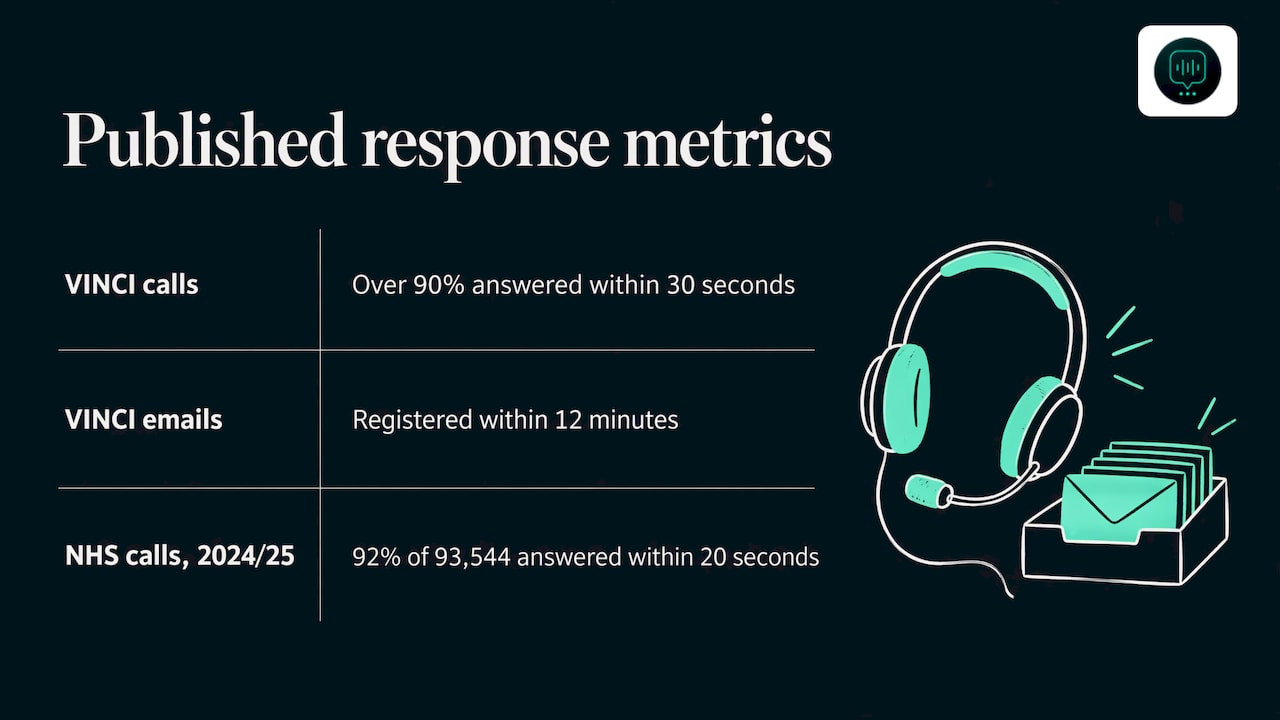
Big operators publish their numbers. VINCI Facilities says its in-house response centre answered more than 90% of calls within 30 seconds and registered emails within 12 minutes. NHS Property Services reported that its Stockport team answered 92% of 93,544 calls within 20 seconds in its 2024/25 report. Those are large, staffed desks, but they show what customers come to expect: a fast answer and a record of the job.
An academic study of a UK FM help desk also noted that customers value being told about delays. That is where automated WhatsApp follow-up earns its place.
Our view on automating the front desk
Most property maintenance owners we speak to do not have a helpdesk problem. They have a phone problem: the engineer is up a ladder or under a sink, and the call goes unanswered. A full helpdesk system is built for large contracts. A firm of ten needs the front end done well: answer, qualify, alert, summarise.
That is why DeskAgent is four agents (Phone, WhatsApp, Web and Inbox) sharing one brain, plus DeskAgent HQ so you can run it from one WhatsApp chat. It is done for you, trained on your services and postcodes, and it always says it is an AI if asked. Your team keeps the decisions that need a human.
Monty Gordon, founder of DeskAgent
Where can you start?
If missed calls are the main leak, start with the Phone Agent at £125 a month. If you want every channel covered and the owner running it from WhatsApp, the Full DeskAgent is £285 a month, or the 3-month pilot is a one-off £500 covering the build and three months live, then £285 a month. See the plans on the DeskAgent site.
FAQ
Do I need a full helpdesk system to automate enquiries?
No. No law requires a helpdesk, though you must keep premises and equipment in good repair under the 1992 Workplace Regulations. A small firm mainly needs every enquiry captured, sorted by urgency and passed to the right person with context.
Will tenants know they are talking to an AI?
The agents sound natural, and they always say they are AI if asked. Tenants get their details taken and the job passed on without waiting for office hours.
Can I still take urgent calls myself?
Yes. Urgent jobs are routed to the owner with a summary, so you decide whether to attend. You can also pause the agents from DeskAgent HQ on WhatsApp.
Does DeskAgent HQ send me a morning report?
No. You message HQ on WhatsApp and ask for today’s leads or a summary when you want one. You can also update prices and FAQs the same way.
Am I locked in?
There are no contracts and you can cancel any time. Single agents have no setup fee, as the first month covers the build.
Sources
- Facilities Helpdesk Services UK: Complete 2026 Guide
- Facilities helpdesk: what it does and how to run one well
- Every Call Answered: Giving FM Service Desk Teams Time, OCS UK, 16 April 2026
- Call answering service, AI or text-back? UK trades guide
- VINCI Facilities Customer Response Centre
- NHS Property Services Annual Customer Feedback Report 2024/25
- Facilities management help desks, Journal of Facilities Management, 2010