Multichannel Customer Service for UK Service Firms: Fix Handoffs
Multichannel customer service means making yourself available on several separate channels so customers can contact you how they prefer. It suits service businesses with a mixed customer base and simple enquiries. YouGov’s research on British preferences and Gov both point the same way, and our own AI front desk, DeskAgent, is one example.
TL;DR:
- Start with two or three channels your team can reliably staff; phone and email remain the preferred contact methods among UK customers, according to YouGov.
- Keep simple bookings and quote requests on separate channels, but integrate records where customers switch channels or face long, complex journeys.
- Route urgent faults to phone, quotes to email, and scheduling to messaging; monitor response times, first contact resolution, and booked jobs by channel.
- Disclose automation and offer a human handoff that preserves context, so customers do not get trapped in an automated loop.
- Collect only data needed for the job, store records securely, and respond to subject access requests within one month without charge.
Table of Contents
- 1. What does multichannel customer service mean in practice?
- 2. Multichannel versus omnichannel: the practical differences
- 3. Which channels are worth running for a service business?
- 4. How does multichannel support drive business outcomes?
- 5. How do you implement multichannel customer service step by step?
- 6. What challenges and legal duties come with multichannel service?
- 7. What this means for service businesses: an editorial view
- 8. How can an AI front desk support multichannel capture and qualification?
- FAQ
- Sources
1. What does multichannel customer service mean in practice?
In practice, multichannel customer service means a business offers phone, email, webchat, messaging apps and social media side by side. Each channel works, but they usually run as separate lanes. The phone team has its own notes, the inbox has its own thread, and the person who answers a WhatsApp message may have no idea what was said on the phone yesterday.
That separation is the defining characteristic, and it is not always a flaw. For a small firm, separate channels are quick to set up and easy to understand. The trouble starts when a customer moves between them.
Here is what typically characterises a multichannel set-up:
- Each channel is staffed, monitored and measured on its own.
- Customer history lives in separate places, such as a call log, a shared inbox and a phone’s message thread.
- Customers choose the channel; the business adapts to them rather than steering them.
- Handoffs between channels rely on the customer repeating themselves or on a team member remembering.
- Reporting shows channel by channel volumes, not a single view of one customer’s journey.
Operational silos form quietly. A trades firm adds WhatsApp because customers ask for it, a cleaning company starts answering social media comments, and a facilities business keeps a separate inbox for tenants. Nobody decides to build a silo; it grows one channel at a time.
GOV.UK’s service design guidance advises looking at a service through user journeys instead of ticking off a list of channels. That is a useful test for any multichannel set-up: follow one customer from first enquiry to completed job and see where they have to start again.
2. Multichannel versus omnichannel: the practical differences
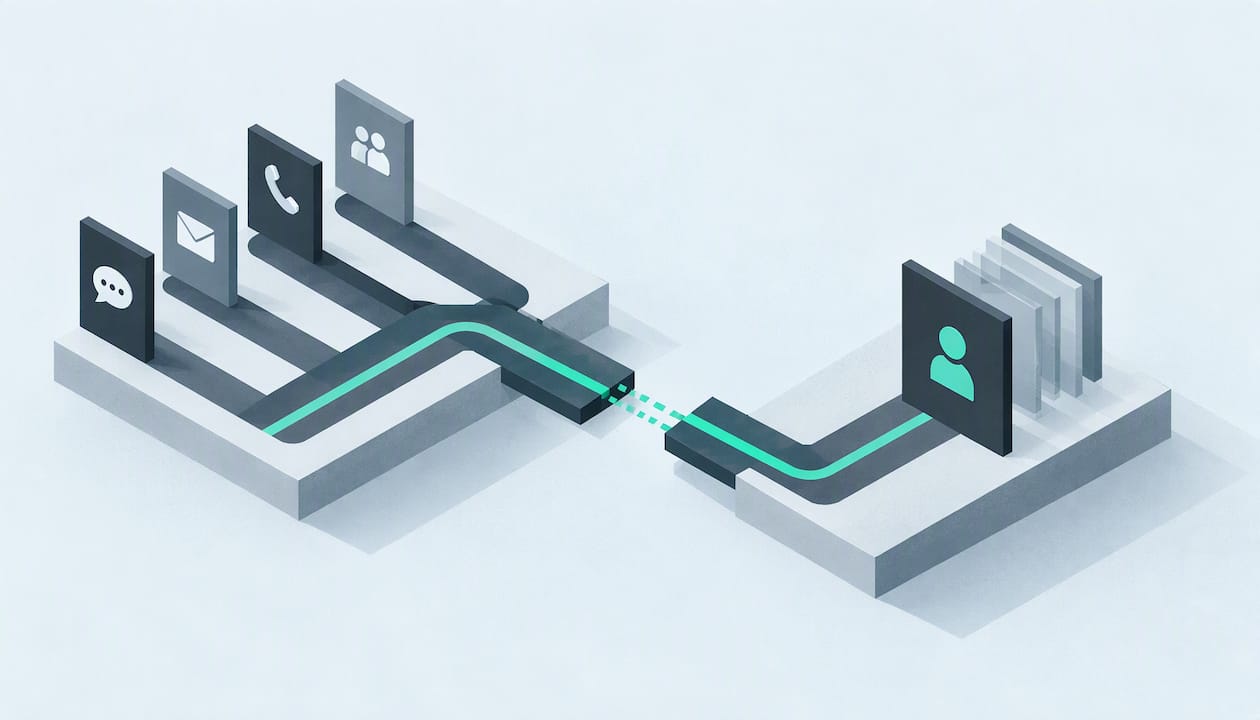
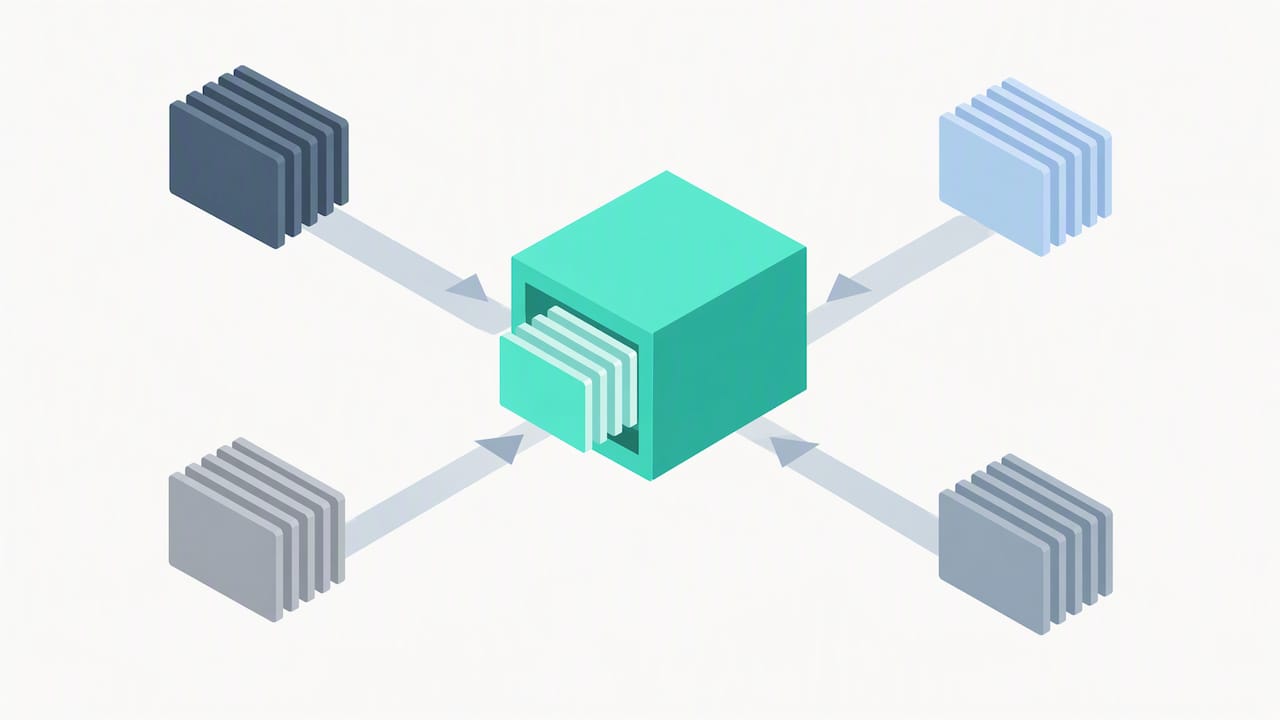
Multichannel and omnichannel customer service both offer many ways to get in touch. The difference is what happens behind the scenes. In multichannel, channels operate independently. In omnichannel, they share one view of the customer, so context follows the person from channel to channel.
Here is how that plays out:
- Data integration: multichannel keeps records in separate tools; omnichannel pulls them into one customer record or shared system.
- Continuity: with multichannel, a customer who emails and then phones may need to explain again. With omnichannel, the agent sees the earlier email.
- Personalisation: multichannel personalises within a channel at best. Omnichannel can tailor responses using the whole history.
- Cost and time: multichannel is cheaper and faster to launch. Omnichannel needs integration work, shared tooling and staff who can work across channels.
Multichannel is a sensible choice when enquiries are simple and self-contained: a boiler service booking, a quote request, a cleaning slot. Customers rarely need to switch channels, so the cost of silos stays low. Omnichannel earns its keep when journeys are long or complex, such as multi-visit maintenance contracts, disputes, or property managers juggling tenants, landlords and contractors.
Most firms sit on a spectrum rather than at one end. A practical route is to start multichannel, watch where customers repeat themselves, and integrate only those points. The UK CX 2025 report examined differences between multichannel and single-channel experiences across UK sectors, and is useful further reading if you are weighing the investment.
3. Which channels are worth running for a service business?
Not every channel earns its place. Choose based on where your customers already are, and set clear expectations for each one. Here is a working checklist:
- Phone: still a leading choice. YouGov found that email and phone remain the most preferred channels for contacting UK businesses. For urgent jobs such as a leak or a lock-out, voice is often the first instinct, so a missed call can mean a lost job.
- Email: suits asynchronous enquiries, quotes and documents. Decide on a response time and stick to it, and filter spam so real enquiries are not buried.
- Webchat: useful for fast triage and for taking pressure off the phone line. Gov is a good reference for running it properly, including being open about automation.
- WhatsApp and messaging apps: a natural fit for local service enquiries and appointment scheduling, where customers want a quick back and forth and may send photos of the problem.
- Social media: best for reputation and quick public replies. Move the real conversation to a private channel as soon as personal details come up.
- Self-service knowledge base: answers repeat questions about coverage areas, pricing approach and preparation for a visit. It also supports webchat by giving it reliable answers to draw on.
Start with two or three channels you can staff well, rather than six you cannot. A channel that goes unanswered does more damage than one you never offered.
4. How does multichannel support drive business outcomes?
Offering several channels widens who can reach you. YouGov notes a generational divide: younger groups lean towards digital or chat support, while older generations prefer the telephone. A hybrid approach lets you serve both without forcing a choice.
The practical benefits for a service business include:
- Better lead capture: when every channel is monitored, fewer enquiries go cold while you are on a job.
- Faster first contact: customers choose the quickest route for them, and an acknowledgement arrives sooner.
- Consistent handling: clear right-channel rules mean a quote request goes to one place and an emergency to another.
- Less wasted effort: routine questions move to self-service or messaging, leaving phone time for urgent work.
To know whether it is working, track a small set of measures:
- Response time on each channel
- First contact resolution
- Share of enquiries by channel
- Conversion from enquiry to booked job
YouGov’s finding that email and phone remain the most preferred channels for contacting UK businesses is a reminder that newer channels add to, rather than replace, the basics.
Channel share is the most revealing number over time. If most enquiries still arrive by phone, that is where your staffing effort belongs, however attractive a new channel looks.
5. How do you implement multichannel customer service step by step?
Good multichannel service is designed, not accumulated. Work through these steps in order:
- Map the customer journeys. Write down how a typical customer finds you, enquiries, books and follows up. Estimate how many enquiries come through each channel. Gov stresses planning volumes and average handling time by channel, so a new channel does not overwhelm the team.
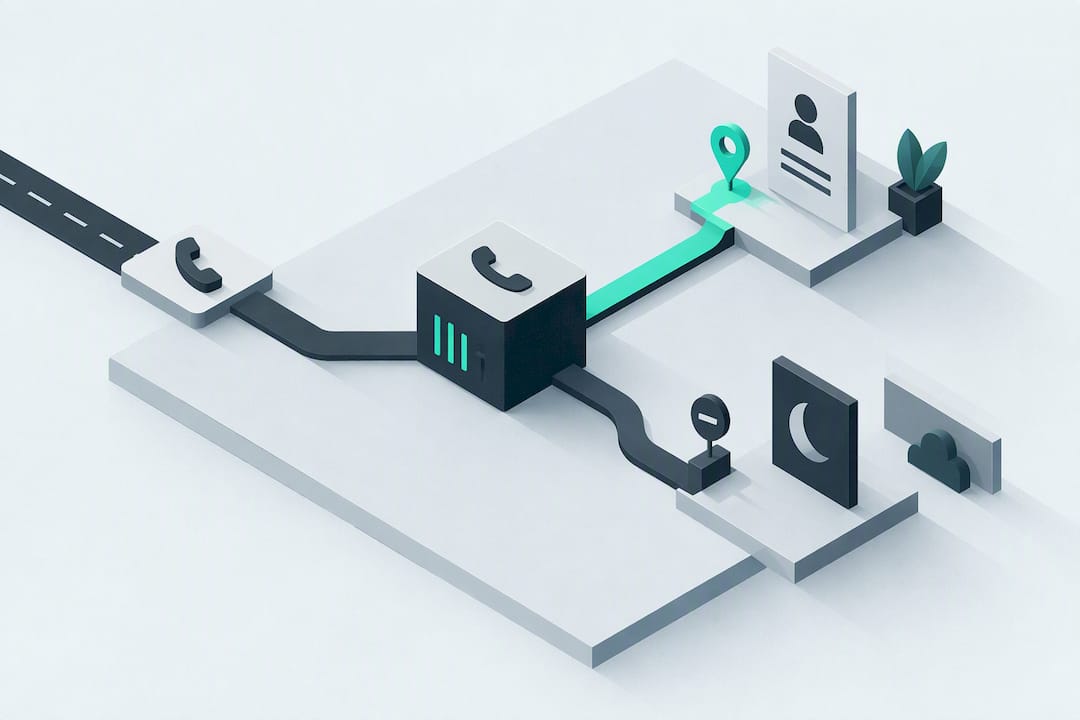
- Define right-channel rules. Decide what belongs where: urgent faults by phone, quotes by email, scheduling by messaging. Routing logic reduces unnecessary handoffs and stops enquiries bouncing around.
- Cross-train your staff. When agents can cover more than one channel, a quiet inbox can absorb a busy phone line during peaks. Short shadowing sessions are usually enough to start.
- Choose technology by category. Look for a shared inbox or CRM, an integrated helpdesk, and messaging connectors. The aim is one place where history is visible, not the longest feature list.
- Use automation for triage, with a human way out. Automation is good at capturing details and sorting urgency. Gov advises being transparent that a customer is dealing with automation and providing a handoff to a person that keeps the context, so nobody is trapped in a loop.
- Monitor and improve. Review average handling time, customer satisfaction and channel trends monthly. Adjust the routing rules when the numbers show a channel is overloaded or underused.
Pro Tip: Pilot a new channel with a clear routing rule before adding another. You will see where context gets lost while the problem is still small.
Resist the urge to launch everything at once. Each channel multiplies the number of places a customer can fall through a gap, so add them at the pace your team can keep up with.
6. What challenges and legal duties come with multichannel service?
The biggest operational pitfall is siloed records. GOV.UK’s service manual warns that when agents cannot see each other’s interactions, customers have to repeat themselves, which generates failure demand: contact that exists only because something earlier went wrong.
Other challenges to plan for:
- Capacity spikes: launching a new channel shifts demand. Customers who found the phone queue frustrating may flood a new webchat, so plan staffing before you switch it on.
- Automation transparency: tell people when they are dealing with automation, and make the handoff to a person quick and context-preserving.
- Training gaps: an agent who excels on the phone may need support to write well in chat.
- Data protection: every channel captures personal data, so the same rules apply to a WhatsApp message as to a form.
Business, provide a privacy notice, limit data collection to what is relevant, and respond to subject access requests within one month without charge.
In practice, that means a clear privacy notice on each channel, collecting only what you need to do the job, storing records securely, and being able to find everything held about a person across all channels when they ask. The ICO guidance summarised on business.gov.uk also covers letting people correct or delete their data and keeping records of processing. Scattered channels make that last duty harder, which is one more reason to keep records in as few places as you can.
7. What this means for service businesses: an editorial view
Most service firms do not need more channels. They need fewer gaps between the ones they already run. A customer who rings after sending a WhatsApp message wants to be recognised, not re-interviewed. I would spend the first effort on capacity planning and context, then add a channel only when the data shows demand. Run a small experiment first with a channel and a routing rule, then review the results. Bigger integrations are easier to justify once you have seen where customers actually trip up.
— Monty Gordon
8. How can an AI front desk support multichannel capture and qualification?
For service businesses that cannot staff every channel around the clock, DeskAgent is an AI front desk. It answers calls, WhatsApp messages and web enquiries, qualifies each lead by intent and urgency, and passes your team a detailed summary so nobody starts from zero.
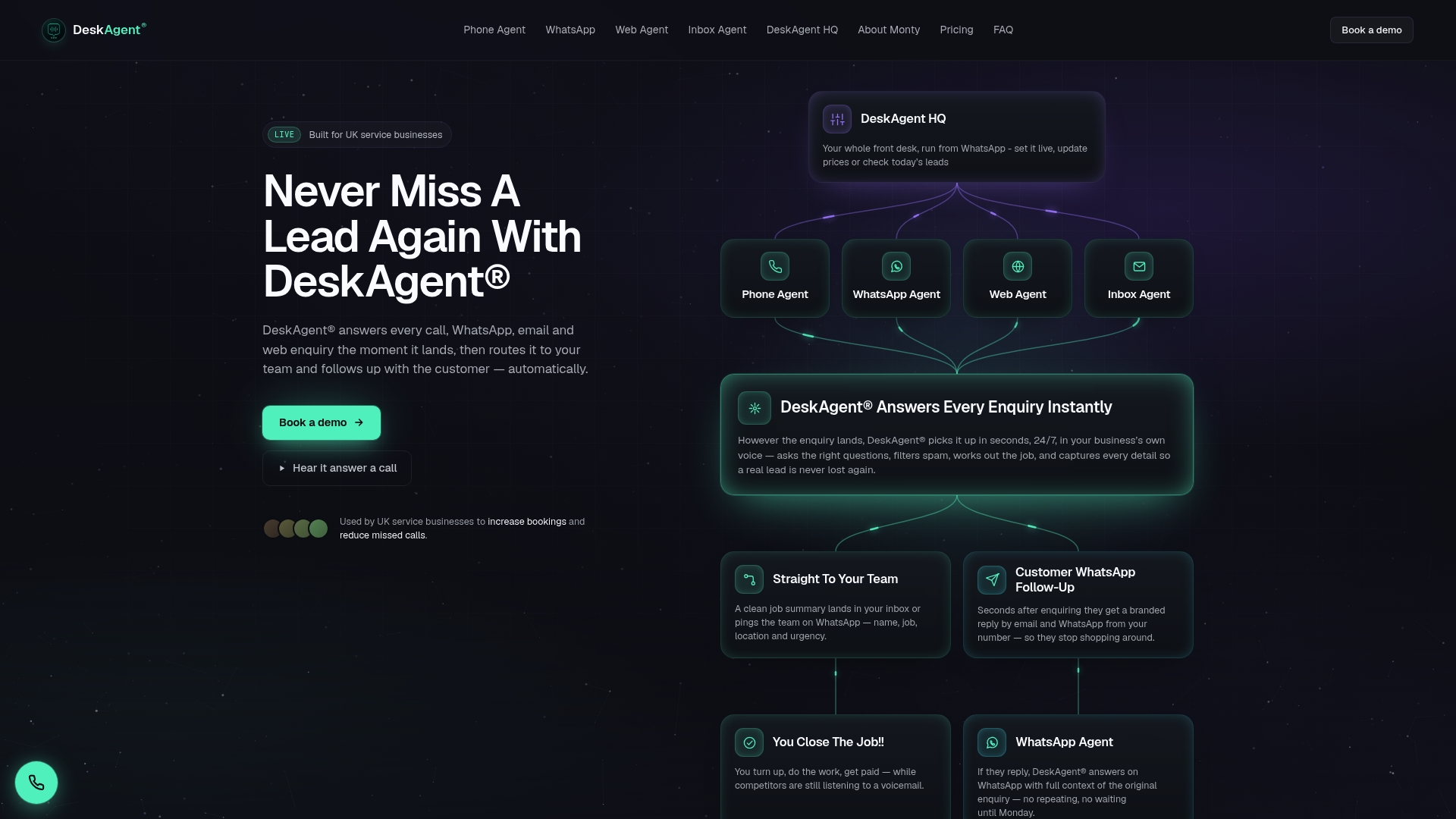
Learn more about DeskAgent on our plans and product page. Plans start from separate Web Agent, Inbox Agent, Phone Agent and WhatsApp Agent options, or the full system. You can see the options on our plans and product page.
FAQ
What is an example of multichannel communication?
A plumbing firm that takes bookings by phone, answers quotes by email and replies to scheduling questions on WhatsApp is using multichannel communication. Each channel works, but they may not share records unless the business connects them.
What does multichannel customer service mean?
It means offering customers several separate ways to reach you, such as phone, email, webchat and messaging. YouGov found email and phone are still the most preferred channels for UK businesses, so a mix usually reflects real customer habits.
How is multichannel different from omnichannel support?
Multichannel runs channels independently, while omnichannel connects them around one customer record. Multichannel is quicker and cheaper to set up, and omnichannel suits longer, more complex customer journeys.
Do chatbots and automation need to be disclosed to customers?
GOV.UK’s guidance advises being transparent about automation and providing a handoff to a human agent that keeps the context. Customers should never be left stuck in a loop.