First Call Resolution: How Small Firms Fix It First Time

First call resolution (FCR) is the share of customer enquiries that are dealt with properly in the first conversation, with no callback, no chasing and no “can you explain it all again?”. For a plumber, cleaner or property maintenance firm, it is the difference between a customer who books and a customer who rings the next company on the list. This guide explains how to work it out with a pen and a spreadsheet, why it matters, what usually sends customers back to the phone, and how to give whoever answers what they need to close the matter first time.
TL;DR
- FCR is calls resolved at the first contact divided by total calls, or put another way, one minus your repeat calls over your total calls.
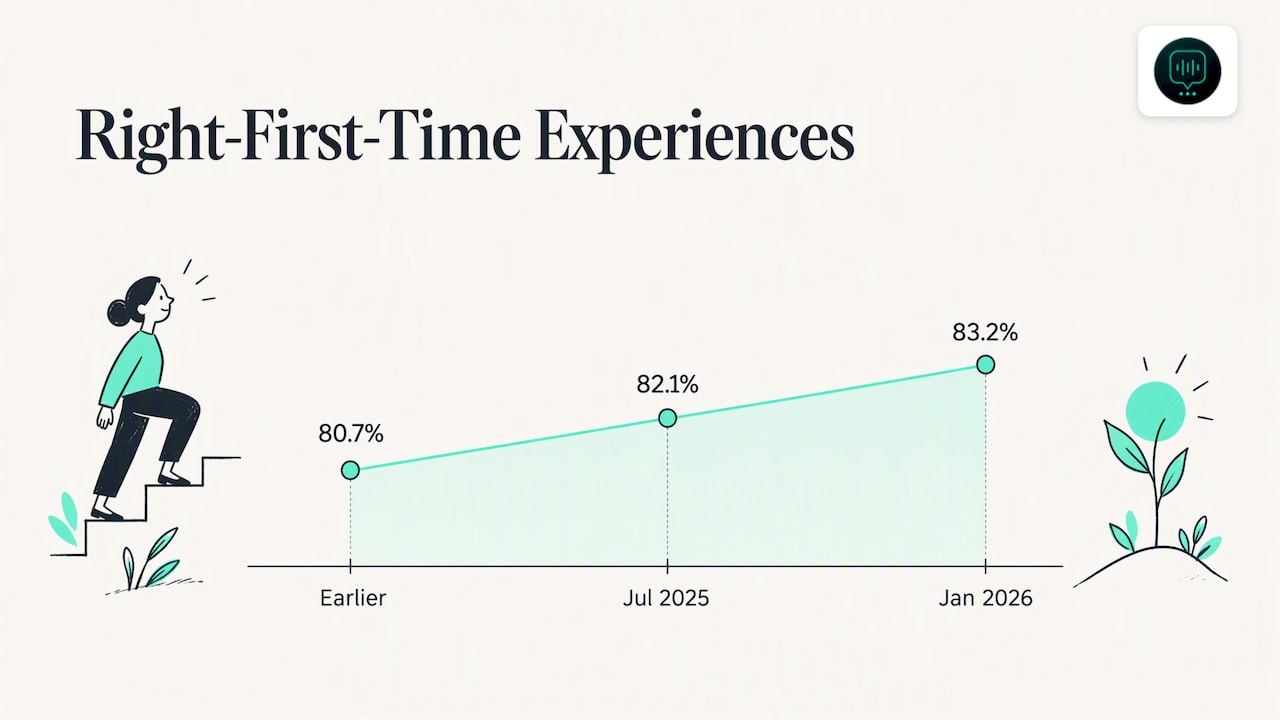
- Customers notice it: the Institute of Customer Service reported 83.2% of UK customer experiences as “right first time” in January 2026.
- Most repeat calls in small firms come from missing information, unclear next steps and messages that never reached the right person, not from difficult customers.
- Track repeat contacts across phone, WhatsApp, web forms and email, and compare yourself with your own past results, not with someone else’s benchmark.
Table of Contents
- What first call resolution means for a service business
- How to calculate your first call resolution rate
- Why it matters for customer satisfaction
- The common reasons customers call back
- Give whoever answers the right information
- How to track first call resolution without a call centre
- Where an AI front desk fits
- Our perspective
- FAQ
- Sources
What first call resolution means for a service business
The term comes from contact centres, where it is a standard measure. Plenty of the guides that rank for it are written for teams of hundreds. A firm of three vans and an office manager can use the same idea without the jargon.
In plain terms: when a customer rings, messages or fills in a form, did that first contact get them to the point where they needed nothing more from them? For a service business, “resolved” depends on what the customer wanted:
- A quote request: you have the address, the type of job, the urgency and a way to reach them, and they know when they will hear back.
- A booking: a date is agreed and confirmed, and the customer knows who is coming and what to prepare.
- An emergency: the right person knows about it, and the customer knows what happens next.
- A question about an existing job: they get a real answer, not “someone will call you back”.
Notice that “resolved” does not always mean “fixed on the spot”. A burst pipe cannot be repaired during a phone call. It is resolved at first contact when the customer has been told clearly what will happen, by whom and when, and nothing further has to be extracted from them.
First call or first contact?
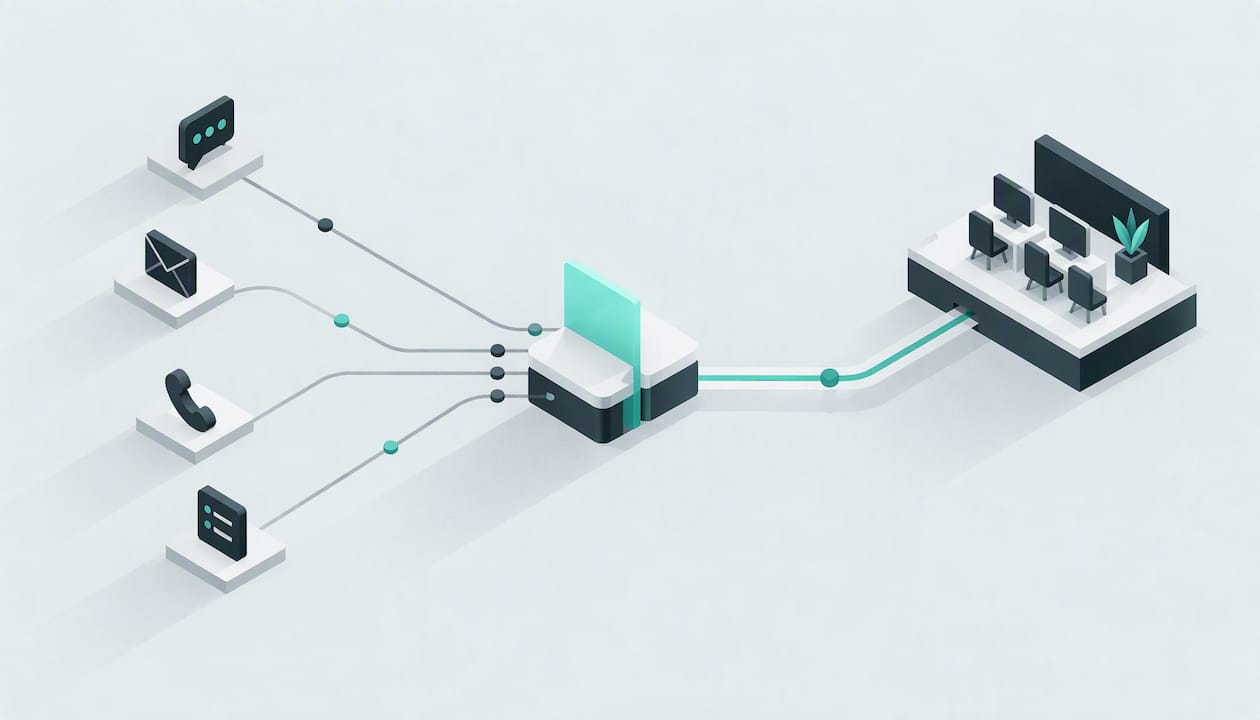
Many sources use “first contact resolution” because customers now switch between channels. Someone may ring, get voicemail, then send a WhatsApp message and later fill in your web form. If you count only phone calls, you miss the repeat that came by message. For a small firm, the practical approach is to think in terms of first contact, whichever channel it arrives on, and keep the familiar “first call” name for the phone line.
How to calculate your first call resolution rate
The simplest version is 1 minus repeat calls divided by total calls. Expressed as a percentage:
FCR % = (contacts resolved at first contact ÷ total contacts) × 100
A worked example
This is an illustration with made-up numbers, not a benchmark. Say a cleaning firm receives 120 enquiries in a month. On review, 22 of them came from customers who had already been in touch about the same matter and had to ask again, because a quote had not arrived, an address was wrong or nobody had confirmed a time.
- Repeat contacts: 22
- Total contacts: 120
- FCR = 1 − (22 ÷ 120) = 1 − 0.183 = about 82%
The number is less important than what you learn when you read those 22 cases, which we come to below.
Decide what counts as a repeat
The hard part is the definition, not the arithmetic. As the Call Centre Helper guidance points out, you have to choose whether a repeat means someone calling back the same day, within two days or within a week. For most trades and cleaning firms, a sensible starting point is:
- Same customer, same job or issue.
- Contact within seven days of the first one.
- Any channel: phone, WhatsApp, web form or email.
- Excluding contacts that are a normal part of the job, such as a customer confirming an appointment they had already agreed.
Write the definition down and do not change it halfway through the year. A consistent definition lets you see movement. A shifting one makes every month incomparable.
Beware of tracking by caller ID alone
Matching repeat calls by phone number is the obvious shortcut, and it undercounts. SQM Group notes that customers often call from work, mobile and home, which breaks simple automated tracking. Their suggestion is to listen for phrases such as “I called earlier”. In a small firm you do not need speech analytics. Add one tick box to your enquiry log or job sheet: “Has this customer contacted us about this before?” Whoever takes the contact asks, and ticks it.
Why it matters for customer satisfaction
Getting things right first time is one of the things customers notice most, and the national data shows it. In its January 2026 UK Customer Satisfaction Index, the Institute of Customer Service recorded the overall score at 78.2 out of 100, up 2.1 points on a year earlier, with 83.2% of experiences described as right first time, the highest level since the index began. The year before, the July 2025 release had put the figure at 82.1%, up from 80.7%, and named it among the factors behind the improvement.
The practical reading for a small firm is that customers now expect to be sorted first time, because most of the organisations they deal with are getting better at it. You can read the wider picture in the Institute of Customer Service’s UK Customer Satisfaction Index, which publishes the scores by sector.
The expectation shows up at the individual level too. SQM’s research reports that 93% of customers expect to resolve their query on the first call. That figure comes from call centre surveys rather than from trades specifically, so treat it as a sign of the general mood, not a prediction for your customers.
What a repeat call costs you
For a service business, the damage is concrete:
- Lost jobs. The customer who could not get a straight answer rings someone else while you are on a roof or in a boiler room.
- Wasted time. Every repeat contact is time spent on a job you have already handled once.
- Frustration on both sides. Customers repeat their story, and your staff hear the irritation in their voice.
- Weaker reviews. A job done well can still earn three stars if getting hold of you was a chore.
We will not put a pound figure on this, because it varies enormously by firm and we would be inventing it. You can work yours out: take your repeat contacts per month, estimate the minutes each takes, and multiply by the hourly cost of whoever deals with them.
The common reasons customers call back
When you read through your repeat contacts, the causes tend to fall into a handful of groups. These are patterns we see described across service firms, so check them against your own log rather than assuming.
1. Nobody answered, or the answer came too late
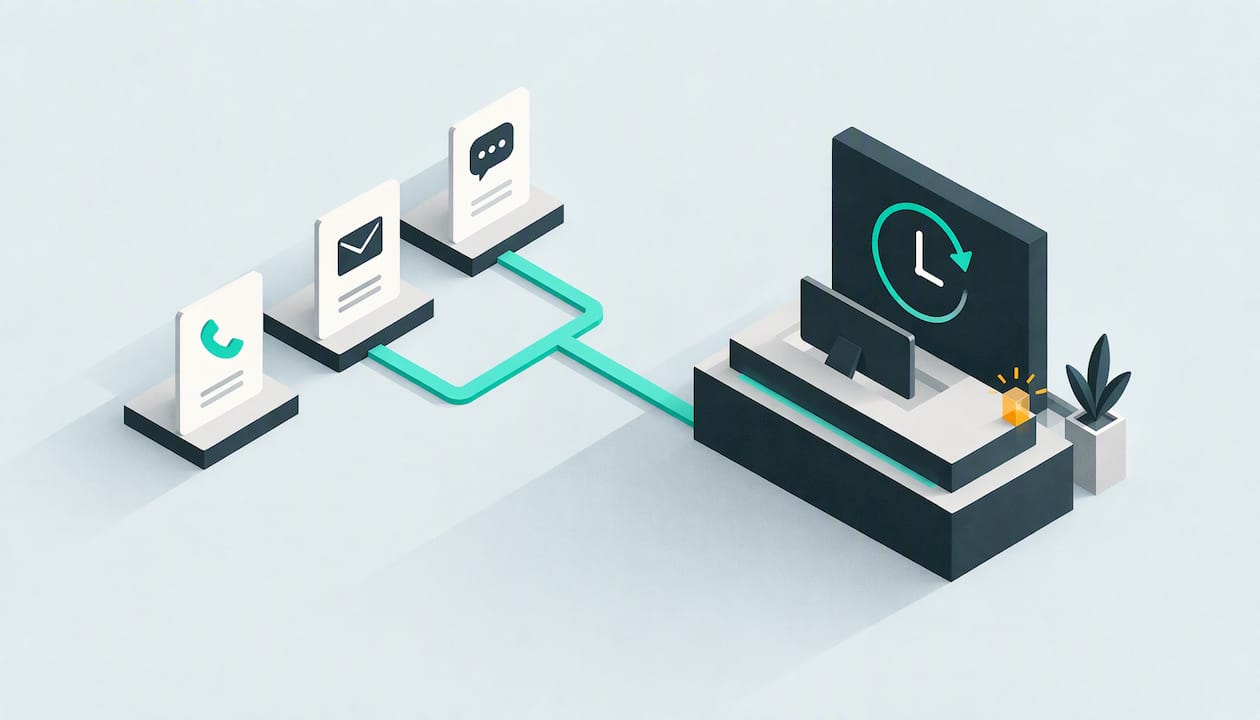
The most basic repeat call is the second attempt after the first went to voicemail. Trades and cleaning firms are often out on site, and the phone rings in an empty office. Our guide to after-hours calls for service owners looks at what to capture and where to set limits when nobody can pick up.
2. Missing details at the first contact
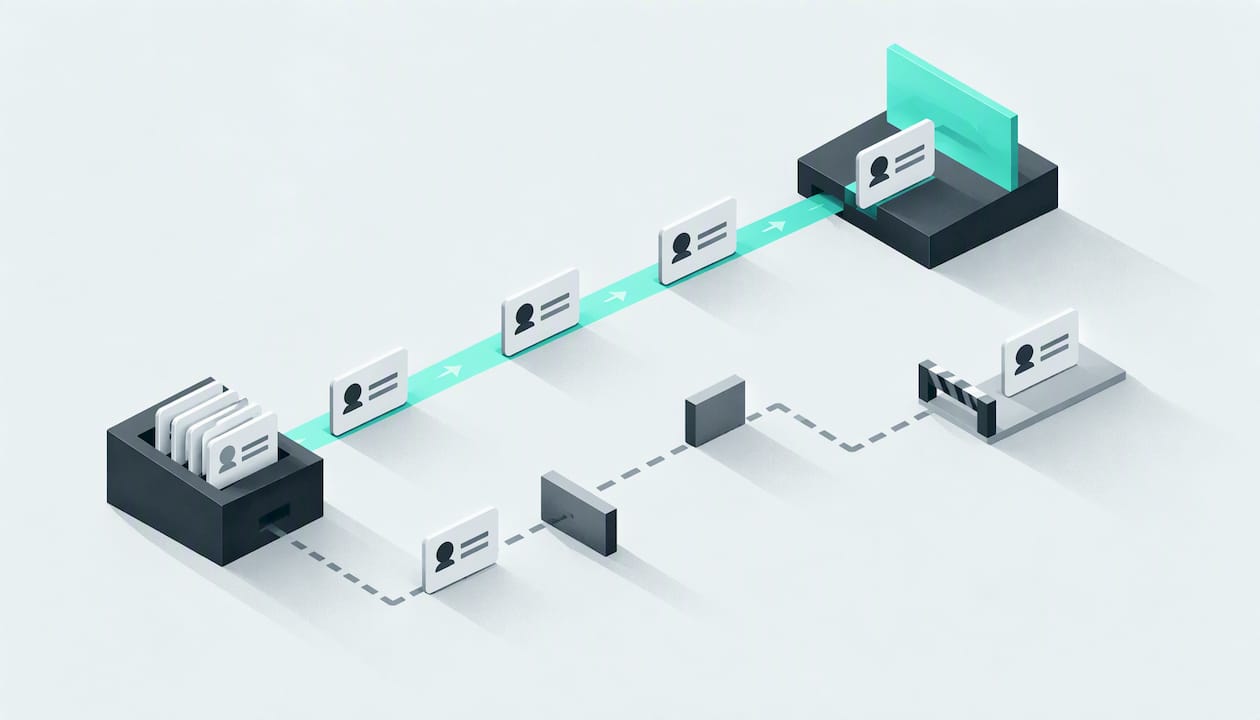
The person answering did not ask for the postcode, the access arrangements, the type of boiler, the size of the property or how urgent the problem is. Someone has to ring back for it, and that is a guaranteed second contact. Our piece on AI lead qualification for service businesses covers which questions are worth asking up front.
3. Unclear next steps
“We’ll be in touch” generates repeat calls. “You will have a written quote by Thursday afternoon, sent by email, and I have noted that you prefer messages to calls” does not. The customer rings again when they cannot tell whether anything is happening.
4. Messages that stall between channels
A customer rings, then sends a photo on WhatsApp, then emails. If each lands with a different person, nobody sees the whole picture. We cover this in detail in multichannel customer service for UK service firms.
5. Quotes and enquiries that go quiet
When a quote goes out and then nothing happens, either you chase or the customer does. Either way, it is a repeat contact. Automated lead follow-up is one way to keep that loop closed without relying on someone’s memory.
6. Knowledge stuck in one person’s head
The owner knows that you do not cover that postcode, that the weekend call-out rate is different, and that certain jobs need a survey first. The new office hire does not. So the customer gets a vague answer and a promise of a callback.
Give whoever answers the right information
Every cause above comes down to the same thing: the person (or system) answering did not have what they needed at that moment. Improving first call resolution is mostly a matter of putting the right information in front of whoever picks up.
Build a one-page answer sheet
Before buying anything, write a single page that covers what an office manager, a subcontractor covering the phone or you on a busy Monday would need:
- Services you offer, and the ones you do not.
- Postcodes or areas you cover, and any surcharge outside them.
- What you charge for call-outs, surveys and quotes, where you quote publicly.
- Typical lead times for routine and urgent work.
- Who to hand an emergency to, and how.
- Answers to the ten questions you hear most.
This is not a manual. It is the thing that stops “I’ll have to check and call you back”.
Use a short intake script
A good intake takes under two minutes and gets the same facts every time:
- Name and best way to reach them.
- Address or postcode of the job.
- What the problem or request is, in their words.
- How urgent it is, and why.
- Any access issues, such as tenants, keys or parking.
- What happens next, and when they will hear from you.
The last line matters as much as the first five. It is the step most often skipped.
Pass the context on, not just the message
When a job is handed from the person who took the call to the person who will do the work, the customer should not have to repeat anything. A summary that says who rang, what they need, how urgent it is and what has already been said is worth more than a name and number on a sticky note. The CCMA’s coverage of AI in contact centres describes language models that classify unstructured enquiries and produce concise summaries, which helps people resolve issues faster because they spend less time sorting through messy information.
Do not chase call length
It is tempting to push staff to get people off the phone quickly. A CCMA leadership publication quotes a contact centre leader who found that calls actually end up shorter once average handling time stopped being tracked for staff. The point carries over: resolving the matter is worth more than finishing the call fast. A two-minute call that causes a callback is more expensive than a four-minute call that closes the issue.
Know when a person needs to step in
Not everything should be automated or scripted. The Institute of Customer Service says that balancing automation with human help is critical for satisfaction: routine enquiries can be handled efficiently, while complex or sensitive issues need the empathy and problem-solving of a person. A tenant describing a leak through their ceiling or a landlord upset about a missed visit needs a human, quickly. Decide in advance which situations those are, and who they go to. Our guide on escalation and out-of-hours answering is a good place to start.
How to track first call resolution without a call centre
You do not need software to begin. You need a habit.
Step 1: log every enquiry in one place
A shared spreadsheet is enough: date, channel, customer, job type, who handled it, and the outcome. If enquiries arrive across phone, WhatsApp, web forms and email, they all go in the same sheet.
Step 2: mark repeats
Add the column “Repeat contact about the same matter?” and fill it in, using the definition you wrote earlier. Review it weekly for ten minutes.
Step 3: record the reason
For each repeat, add a one-word cause: “no answer”, “missing info”, “no update”, “wrong person”, “quote chase”. After a month you will see which one dominates.
Step 4: fix one thing at a time
If “missing info” leads, rewrite the intake script. If “no update” leads, set a rule that every contact ends with a stated next step and time. Change one thing, then see whether the rate moves over the following month.
Step 5: compare with yourself
It is natural to look for a benchmark such as “good FCR is 80%”. Be careful. Call Centre Helper makes the point that FCR depends so heavily on your own business processes that comparing across organisations is often misleading: a firm handling complex maintenance queries will naturally score lower than one giving simple status updates. The sensible benchmark is last quarter’s you.
Pair it with other measures
FCR alone can be gamed. If staff are pressed to “resolve” everything, they may close contacts too early. Read it alongside:
- Missed or unanswered enquiries, because a call never answered is not counted as a repeat until the customer tries again.
- Time to first response, across every channel.
- Quote-to-booking conversion, which shows whether resolved enquiries become work.
- Reviews and comments, which tell you what the numbers cannot.
Where an AI front desk fits
For a small firm, the hardest part of first call resolution is that the people who could resolve things are busy doing the work. DeskAgent® is an AI front desk for UK service businesses. It answers calls, WhatsApp messages, web enquiries and email around the clock, qualifies each lead by understanding intent and urgency, and passes your team a detailed summary so that whoever picks it up has the context. It can book into your calendar, filter spam from email enquiries, send automated follow-ups and hand over to a person with the conversation preserved. It is trained on your own services, coverage and FAQs, which is the answer sheet described above put to work.
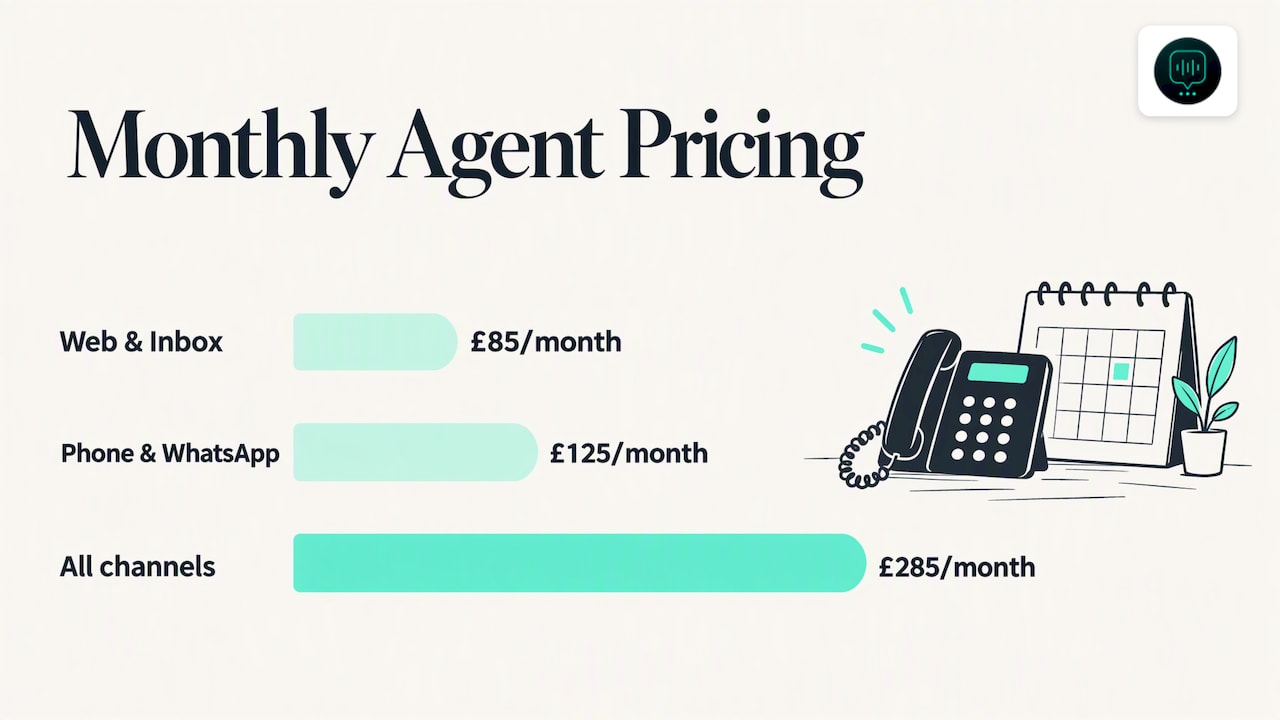
Pricing is published on the DeskAgent site: Web Agent and Inbox Agent are each £85 per month, Phone Agent and WhatsApp Agent are each £125 per month, and the full DeskAgent® system covering every channel is £285 per month, with a one-off setup fee of £500. If you want to see how the costs compare with other ways of covering the phone, our AI receptionist pricing guide for UK service firms goes through them, and our practical guide to AI receptionists for small businesses explains what to expect. No tool resolves everything, and results depend on how well your information and processes are set up.
Our perspective
We talk to a lot of owners of trades, cleaning and property maintenance firms, and the story is rarely “our people are bad on the phone”. It is usually “nobody was free to answer” or “the message got to the wrong person”. Those are information and availability problems, and they are fixable.
We also think first call resolution is easy to misuse. Chasing a high percentage by closing contacts early helps nobody. What matters is that the customer knows what is happening and that your team does not have to ask the same questions twice. So we build around three ideas: answer straight away, ask the right questions based on what the customer actually needs and how urgent it is, and hand over with the full context. Where a situation needs a human, a human should take it, with the history in front of them.
Start with the simple things in this guide before you spend anything. A clear answer sheet and an honest repeat log will teach you more about your business than any benchmark.
— Monty Gordon
FAQ
What is a good first call resolution rate?
There is no single figure that suits every business, because the rate depends on what your customers ring about. A firm answering simple status questions will score higher than one handling complex maintenance queries, so published benchmarks can mislead. Measure your own rate for a few months, then aim to improve on it.
How do you calculate first call resolution?
Divide the contacts resolved the first time by your total contacts and multiply by 100. Or take your repeat contacts divided by total contacts and subtract that from one. Decide beforehand what counts as a repeat, such as the same customer and issue within seven days on any channel, and keep that definition fixed.
What is the difference between first call resolution and first contact resolution?
First call resolution counts only phone calls. First contact resolution covers every channel, including WhatsApp, web forms and email. Since customers switch between channels, small firms usually get a truer picture by counting all of them.
How do I reduce repeat calls from customers?
Find out why they happen first: log each repeat and note the cause. The usual fixes are an answer sheet for whoever picks up, a consistent intake script, a stated next step and time at the end of every contact, and a way to capture enquiries when you are on site. Change one thing at a time so you can see what worked.
Does answering faster improve first call resolution?
It helps with the repeat that comes from an unanswered call, but speed alone does not resolve an enquiry. The person or system answering also needs the right information to settle the matter. Fast and complete is the combination to aim for.
Sources
- Institute of Customer Service: UK Customer Satisfaction Index, January 2026
- Institute of Customer Service: UK Customer Satisfaction Index
- Institute of Customer Service: welcome uplift in customer satisfaction
- Call Centre Helper: formula to calculate the call resolution
- Call Centre Helper: first-call resolution
- SQM Group: calculate first call resolution rate
- CCMA: Ventrica AI and evolving contact centre technology
- CCMA Leadership Series: why insights are key to building strategic value